
What if quirky office accessories increased your productivity and happiness at work?
You spend a huge chunk of your life at your desk, so why does it still feel like a beige waiting room you just pass through?
What if a few quirky office accessories could quietly tidy your space, calm your brain, and gently nudge you into getting more done, all while making you smile?
In the original idea behind this topic, the focus was simple. First, your workspace does not have to be boring. Second, when you surround yourself with playful, functional accessories, you naturally get more organized, less stressed, and more creative. This article takes those two starting points and turns them into a practical step by step path you can follow to build a desk that actually works for you.
Here, you will walk through a clear ladder. You start by pinpointing one everyday problem on your desk. Then, you add one smart, quirky tool that fixes it. After that, you stack on a few more small upgrades that bring order, personality, and joy. By the time you reach the top, you will see how just a handful of fun objects can shift your focus, your energy, and even how you feel about Mondays.
Table of contents
Here is what you are about to climb through, step by step:
1. Why your desk is quietly draining you
2. Step 1: clear one pain point with one playful fix
3. Step 2: turn clutter into a system you barely have to think about
4. Step 3: add personality that actually boosts focus and mood
5. Step 4: design tiny rituals that make work feel lighter
6. Step 5: keep momentum with simple rules and small upgrades
7. Key takeaways
8. FAQ
Why your desk might be quietly killing your focus
If you have ever sat at your desk, stared at the same pile of cables, sticky notes, and random pens, then thought "no wonder I cannot focus," you are not imagining it.
Visual clutter competes for your attention and makes your brain work harder. One study from the Princeton Neuroscience Institute found that physical clutter limits your brain's ability to process information, which drags down focus and productivity. At the same time, research shows that employees who can personalize their workspace can be up to 25 percent more productive than those stuck in sterile, generic setups.
So your problem is not that you are "bad at focusing." The real issue is that your environment is working against you. Too many random items, not enough smart tools, and zero sense of joy. That mix breeds stress, procrastination, and the feeling that work is endlessly heavy.
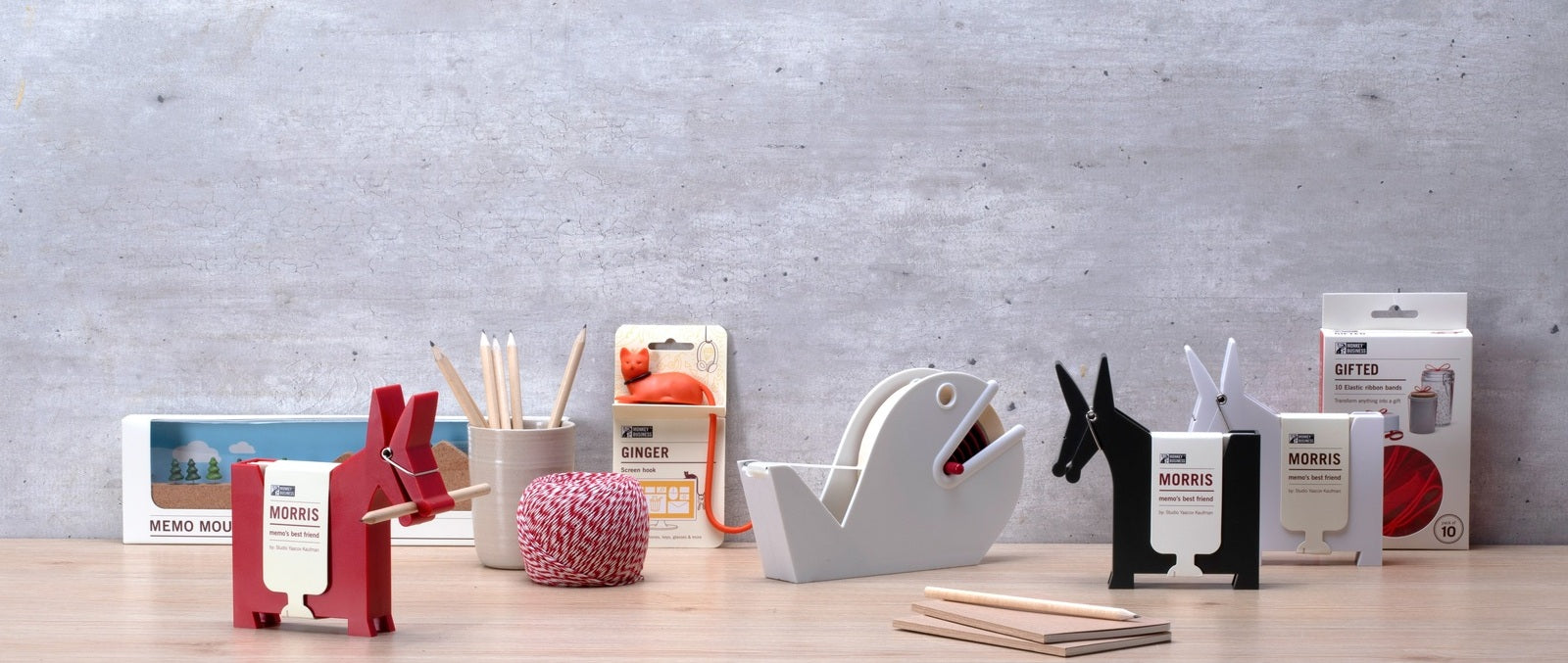
This is where quirky office accessories come in. Not as cute distractions, but as functional tools that sneak in three powerful benefits at once: organization, stress relief, and creativity. When you add simple, playful products like Ginger cable hooks or memo holders, you prove to yourself that a workspace can be fun and still seriously efficient.
You are going to climb this in stages. You will not rip your whole office apart or spend a fortune. Instead, you will layer a few strategic changes that transform how your workspace feels and how your brain behaves in it.

Step 1: start with one annoying problem
Before you buy anything, you need to name the one thing on your desk that frustrates you the most.
Is it tangled cables hitting the floor every time you unplug your laptop? Sticky notes drifting away so you forget important calls? Pens vanishing right when you need to sign something? Or maybe your desk just looks flat and lifeless, which quietly drags down your mood.
Think of this as your base camp. You are not redesigning your entire office yet. You are picking the single biggest friction point and solving that first. When you are not sure where to start, you identify your biggest pain point, then choose one accessory that attacks it directly.
Here are a few quick matches, based on common problems:
• If cables are everywhere, a playful hook like Ginger keeps them in place along the edge of your desk so you are not fishing behind drawers every morning.
• If reminders get lost, a memo holder like Memo Mountain turns important notes into a small visual focal point, not a random scrap under your keyboard.
• If papers sprawl, a simple clip based organizer keeps documents stacked and categorized in seconds.
A true to life example. Imagine you are Sarah, a project manager juggling deadlines. Every day starts with hunting for the right charging cable and the latest meeting note. She adds Ginger for cable management and Memo Mountain for notes. Two tiny changes. Within a week, she is no longer wasting those scattered minutes, and her desk looks surprisingly intentional.
Step 2: build a simple system around that solution
Once your biggest issue is under control, it is time to build on that win.
Your goal now is to turn random stuff into a light, almost automatic system. You are not aiming for a minimalist magazine photo. You are aiming for a space where everything has a home and your brain can instantly see what matters.
This is where quirky office accessories shine. They are memorable, so you are more likely to consistently use them. For instance, if you use a character shaped holder, you are not just tossing paper clips in a dull cup. You are giving them a home on a character you actually notice.
Here is how you can turn that first fix into a broader system.
1. Give every category one "anchor" item. Cables on Ginger hooks. Notes on Memo Mountain. Papers inside a bright folder. Small tools in a multifunctional stand.
2. Limit yourself to what fits. If your papers no longer fit in your chosen stand, it is time to file or discard, not just stack more.
3. Keep the system visible. Place these anchors inside your natural line of sight, not hidden in a drawer. What you see easily, you use consistently.
Studies on clutter and cognition, including research summarized by the National Institutes of Health, show that when your environment supports simple choices, you spend less mental energy on decision fatigue. That energy comes back to you in the form of sharper focus and more willpower for real work.
Step 3: add personality that helps you focus
Now that the basics are under control, you can climb to the next level: making your desk feel like it belongs to you.
This is not about crowding your space with random decor. It is about choosing a few quirky, joyful items that pull double duty, personality plus function. When you do this well, your workspace starts to energize you instead of draining you.
The productivity boost is real. As mentioned earlier, research shows that employees who can personalize their environment can be up to 25 percent more productive. A little bit of autonomy and self expression goes a long way.
Here is how to personalize with purpose using quirky office accessories.
• Choose a theme that makes you smile. Maybe you like animals, mountains, or bright pops of color. Accessories like animal shaped tool holders or mountain shaped memo boards fit right in.
• Make every "fun" item do a job. A decorative memo holder still organizes your to dos. A character shaped stand still stores your phone, pens, or cards.
• Limit it to three to five focal pieces. Too many objects will feel noisy. A small curated group feels designed instead of cluttered.
The right quirky accessory makes your workspace feel more you and less generic, while still helping you do something useful.
Step 4: create tiny rituals that make work feel lighter
Now you are moving higher up the ladder. Your desk is more organized and your personality is showing. Next, you use those quirky objects to build small rituals that anchor your day.
Rituals tell your brain "now we start" or "now we stop" which can improve self control and reduce stress. They do not have to be complicated. In fact, they work better when they are quick and tied to objects you already see.
Here are a few simple ritual ideas using playful office accessories.
• Start of day: place today's top three tasks on your memo holder, such as Memo Mountain, then plug in your laptop using cables held by Ginger. That act signals the start of focused work.
• Midday reset: after lunch, clear any loose papers back into a stand. This takes two minutes but makes the afternoon feel like a fresh start.
• End of day: clip tomorrow's priorities in one spot, power down, and return tools to their holders. Your desk "returns to neutral," so tomorrow morning feels clean instead of chaotic.
These rituals work because they are physical and visible. Every time you do them, you are pairing motion with intention. Over time, your brain associates your quirky accessories with a calm, capable version of you, not a frazzled one.
Step 5: keep momentum with tiny upgrades
You have climbed from chaos to intentional, personal, even enjoyable. The final step is staying there without turning productivity into another chore.
That means using a few light rules and small future upgrades that keep your desk playful and efficient.
Try these simple guardrails.
1. One in, one out. Every time you add a new object to your desk, remove something else. This keeps the number of items stable and your space breathable.
2. Solve problems as they appear. New annoyance? Maybe headphones have no home now that you use them daily. Add one purposeful accessory to handle it, rather than stacking another random tray.
3. Check in weekly. Once a week, take 5 minutes to reset your anchors. Cables back on Ginger, notes back on Memo Mountain, papers in folders. You are not "cleaning." You are just rewinding your system.
When you do this, quirky office accessories stop being novelty items. They become a practical framework that quietly supports how you work. Small additions, like playful memo holders or cleverly designed hooks, create order and efficiency without you having to think too hard about it. And because each piece has personality, you are more likely to notice when it is out of place and fix it on the spot.
Key takeaways
- Start by identifying one major desk pain point, then pick a single quirky office accessory that solves it directly.
- Turn that quick fix into a simple system where every kind of item has one clear, playful home.
- Use fun but functional accessories to personalize your workspace in a way that supports focus and boosts your mood.
- Build tiny daily rituals around your tools to signal the start, reset, and end of your workday.
- Maintain momentum with light rules, like one in one out, so your desk stays organized, efficient, and enjoyable.

Reaching the top: a happier, more productive you at your desk
Look at the steps you have taken. You started by naming one stubborn problem, then fixed it with one playful, functional accessory. You built a simple system around that solution, used personality to make your space feel like your own, then layered on tiny rituals and rules that keep everything flowing.
None of this required a full office remodel or a complicated productivity framework. You simply let your tools do more of the work. When hooks, holders, and mountain shaped memo boards keep your essentials organized and visible, your brain gets to focus on bigger things. When each item has a hint of humor or charm, your desk becomes a place you do not dread sitting down at.
The result is a workspace that nudges you toward better habits every day, without feeling strict or sterile. You feel lighter, more in control, and yes, genuinely happier while you work.
So the real question is this: if a handful of quirky office accessories could quietly raise your productivity and make you smile more during the day, why would you keep settling for a desk that does not?
FAQ
Q: Do quirky office accessories really improve productivity, or are they just cute decor?
A: They can absolutely help productivity when you choose pieces that solve real problems. For example, Monkey Business offers products like Ginger for cable management and Memo Mountain for notes, which directly cut down on time wasted hunting for essentials. Pair function with fun, and you get tools you actually use every day.
Q: How do I choose which quirky accessory to start with?
A: Begin with your biggest pain point. Is it clutter, lost notes, tangled cords, or low motivation? Pick one accessory that directly targets that issue. If you lose reminders, choose a memo holder. If cables annoy you, choose a cable hook. Tackling one problem first gives you a quick win and momentum.
Q: How many accessories should I have on my desk?
A: Aim for three to five key pieces that each have a clear job. More than that, and your desk can start to feel crowded again. Focus on anchors, such as a memo holder, a cable solution, a pen or tool stand, and maybe one mood boosting item like a small lamp or art piece.
Q: Are playful office accessories appropriate in a professional setting?
A: Yes, as long as they stay tasteful and functional. Monkey Business emphasizes that their products are playful yet professional, designed to bring personality without disrupting workflow. Choose items that look clean and well designed, not crude or distracting, and you will be well within office norms.
Q: What if my company has strict design rules for desks?
A: Work within the guidelines using subtle but smart accessories. Neutral colored hooks, minimalist memo stands, or compact organizers can still add personality through shape and function rather than bright color. Even small upgrades, like better cable management or a clever note holder, can make a real difference without breaking any rules.
Q: How do I keep my desk from getting cluttered again over time?
A: Use a simple weekly reset and a one in, one out rule. Once a week, spend five minutes returning items to their hooks, stands, and holders. Any time you add something new, remove something you no longer use. This keeps your space intentional and ensures your quirky tools stay helpful rather than buried.