
What if playful kitchen utensils inspired healthier eating habits every day?
If cooking felt more like play and less like work, how different would your plate look every day?
The original article you are building on explored how Monkey Business gadgets make serving and organizing feel lighter, brighter, and more fun. It showed you how a clever egg shaper or a pasta inspired steam releaser can turn basic meals into little events that lift your mood and invite you to try more in the kitchen.
Here, you go one step further. You are not just celebrating cute tools. You are uncovering how playful kitchen utensils can quietly reshape your daily habits, help you cook at home more often, bring kids into the process, and even nudge your entire household toward fresher, healthier food without anyone feeling forced or judged.
Mini table of contents
You are about to uncover this map, step by step:
- Why fun tools change how you feel about cooking
- The hidden link between playful utensils and healthier eating
- How Monkey Business gadgets turn tiny actions into lasting habits
- Ideas to get kids and picky eaters excited about real food
- Simple ways to redesign your kitchen so healthy choices feel natural
When cooking starts to feel fun again
You know that eating more home cooked meals is better for you. Research from the Harvard T.H. Chan School of Public Health shows that regularly cooking at home is linked with better diet quality and fewer calories from sugar and unhealthy fats. Yet after a long day, chopping vegetables or prepping a balanced plate can feel like just another chore.
This is where your tools start to matter more than you think. Monkey Business has built its entire collection around one simple idea: if you smile when you reach for a utensil, you are more likely to actually use it and enjoy the process. The BOWLERO terracotta bowls, for example, are not only stackable and sturdy. They add a pop of color to your everyday meals, which makes a quick salad or fruit bowl feel like something worth presenting, not hiding.
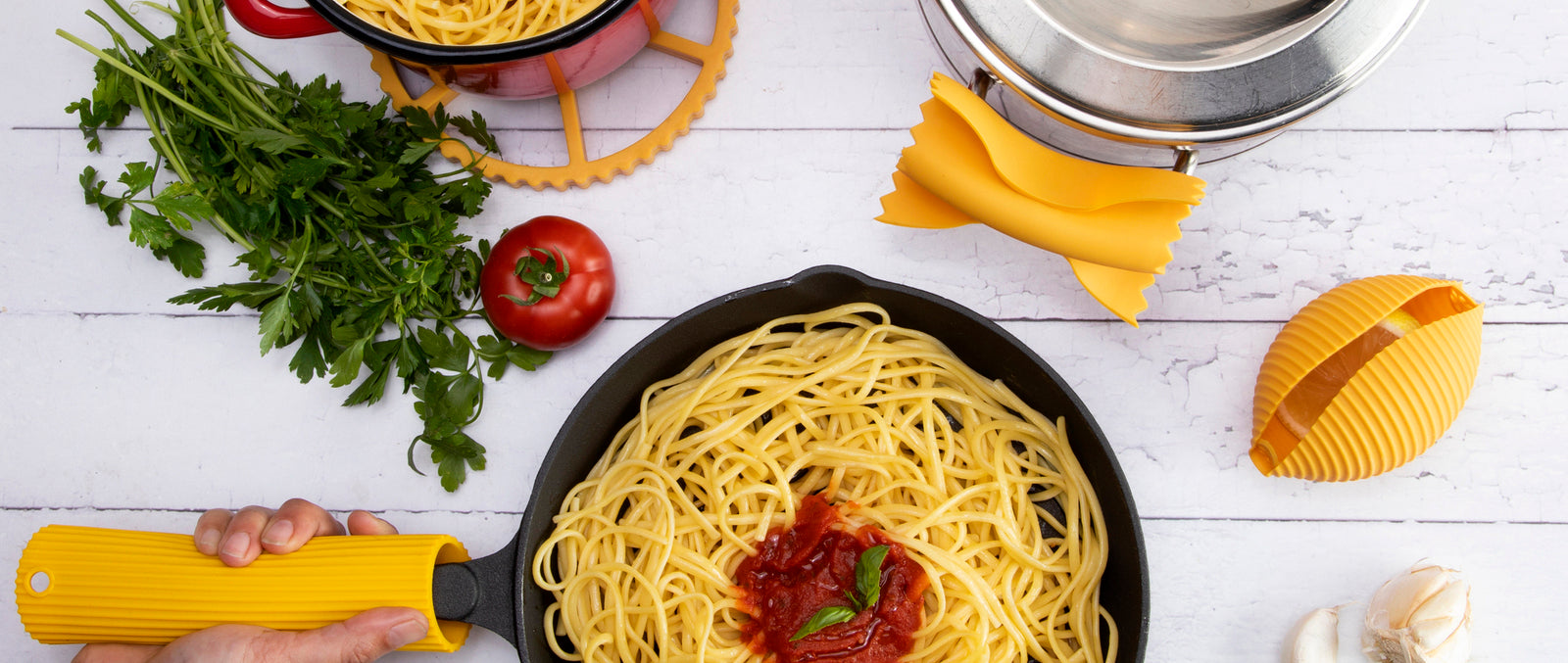
Then there are the Mafaldine elastic bands, inspired by pasta. They keep utensils, herbs, or produce bundled without slipping. That tiny detail matters. When your drawers are not a mess, you find what you need faster, which reduces friction and makes it easier to say, "I will cook" instead of "Let us just order in."
Monkey Business knows that you are not only buying a tool. You are buying a feeling. A little moment of joy that helps you step into the kitchen with less dread and more curiosity.
And once cooking feels just a bit more fun, eating better stops feeling like a punishment and starts feeling like a choice.

How playful utensils change your mood
Let us start with the obvious layer of the map. Playful kitchen utensils make you feel better while you cook. That feeling, on its own, is powerful.
Think about breakfast. Most days, it is rushed, repetitive, and easy to phone in. But when you use something like the Sunnyside fried egg shaper from Monkey Business, your egg suddenly becomes a sunrise on your plate. You did not change the ingredient. You changed the experience.
The same goes for Gregg's fried egg shaper, which turns fried eggs into a playful character. For kids or picky adults, a simple egg can now feel like a friendly invitation instead of a "you must eat this" command. You still get the protein, the healthy fats, and the steady energy. You just removed the resistance.
This matters because your brain responds to visual cues and environment. Studies on "nudging" and food environments, like those shared by the Centers for Disease Control and Prevention (CDC), show that small changes in how food is presented can significantly shift what people choose to eat. If a delightful egg shaper nudges you to cook eggs at home instead of grabbing a sugary pastry, that is a real health win hiding inside a fun gadget.
Now, zoom out to your stovetop. A pot is simmering. Steam is building. You reach for the Farfalle steam releaser, shaped like a little bow tie pasta, to vent your pot safely. It looks adorable. It also makes you feel just a little more competent and careful in the kitchen. That quiet confidence makes you more willing to experiment with soups, stews, or whole grain pastas, instead of defaulting to the same processed options.
Hidden insight 1: play lowers the barrier to healthy habits
Here is the first hidden landmark on this map. Play does more than entertain you. It lowers your mental barriers.
Psychologists talk about "friction cost," meaning the tiny bits of effort that can stop you from doing something that is good for you. Feeling bored, overwhelmed, or clumsy in the kitchen creates friction. You promise yourself you will meal prep, then stare at the cutting board and end up tapping a delivery app.
Monkey Business designs cut through that friction with humor and charm. When a tool feels like a toy you want to touch, your brain registers less effort in starting. This is the same principle used in educational play for kids. Playful kitchen tools can teach children about nutrition by turning learning into a game. Sorting colors, building balanced plates, or creating rainbow salads helps kids internalize healthy patterns long before they read a label.
You can borrow that exact strategy in your real kitchen.
For example, you might:
- Use bright, stackable BOWLERO bowls for a weekly "rainbow bowl" night. You challenge yourself to fill each bowl with a different color vegetable or fruit. - Tie bunches of herbs, carrots, or asparagus with Mafaldine elastic bands and store them front and center in your fridge. You create a visual mini garden that encourages you to grab produce first. - Turn weekend brunch into "egg art hour" with Sunnyside and Gregg's shapers. You lay out chopped veggies and let everyone decorate their plate. More colors, more nutrients, less complaining.
By making the action playful, you reduce the sense of obligation. Your brain focuses on the fun, and the healthy choice slips in as the default.
Hidden insight 2: design helps you organize for healthier choices
The second hidden landmark is less about feelings and more about structure. When your kitchen is better organized, you are statistically more likely to cook and eat well.
A survey from the National Recreation and Park Association noted that adults who prepare more of their meals at home tend to eat more fruits and vegetables and consume fewer calories overall. But consistent home cooking depends on an organized, inviting space.
This is where Monkey Business quietly shines. Mafaldine elastic bands keep gadgets, pantry items, and even bunches of produce grouped neatly. That means you waste less time hunting for what you need. Stackable BOWLERO bowls let you prep toppings, salad components, or snack portions in advance, then store them efficiently.
That kind of simple organization has real effects. In one real life example, a busy parent started prepping after school snacks in small colorful bowls at kid eye level in the fridge. Grapes, carrot sticks, cherry tomatoes, and nuts went into bowls that looked fun to grab. Over a month, the family's packaged snack purchases dropped significantly, simply because the healthy option was easier and more attractive.
Your kitchen layout can also signal how you eat. If the tools you love are connected to real, whole foods, you naturally reach for them more often. That is where Monkey Business's focus on vegetables, fruits, and home cooking tools becomes strategic, not just cute.
Hidden insight 3: playful tools help kids build healthy habits early
Here is the next section of the map, and it is especially important if you have kids, grandkids, or young visitors in your life.
Children learn through play. The Pennsylvania Learning Standards for Early Childhood highlight how playful experiences help kids practice new skills, explore everyday objects, and build healthy concepts about their bodies. When you invite kids into the kitchen with playful utensils, you are doing exactly that, in real time.
Using fun tools, you can:
- Turn breakfast into a mini nutrition lesson. While you use Sunnyside or Gregg's egg shapers, talk about how protein keeps you full for school or play. - Let kids help organize groceries with Mafaldine elastic bands. Ask them to group fruits, vegetables, and grains. You are teaching sorting, categories, and balanced meals, without a lecture. - Use BOWLERO bowls for "rainbow challenges," where kids win by adding as many colors of produce as possible to their plate.
Playful kitchen tools can improve nutrition knowledge and willingness to try new foods. You can create that same sense of play with real, edible ingredients, guided by tools that feel like toys but work like professional gadgets.
Over time, kids start to associate real cooking with fun, creativity, and autonomy. That is a powerful base for healthier eating well into adulthood.
Hidden insight 4: tiny design choices can break food ruts
Healthy eating is not only about adding vegetables. It is also about breaking out of ruts that keep you bored and reaching for the same processed comfort foods.
Monkey Business tools are intentionally playful, which nudges you toward experimentation. You might not try a new shakshuka recipe on a random Tuesday. But you might try shaping eggs in a different way, or layering grains and roasted vegetables in those colorful terracotta bowls because it looks fun to assemble.
Once you are experimenting at that small level, you are more likely to:
- Try new herbs or spices in your egg dishes. - Mix in extra vegetables or beans with your pasta. - Present fruit as a bright shared bowl at the center of the table instead of a forgotten side.
In other words, fun keeps you curious. Curiosity keeps you moving, even if you feel stuck in other areas of your life. Each playful utensil becomes a little prompt to try a new ingredient, cook at home one more night, or swap a packaged snack for something fresh.
How to turn playful utensils into daily healthy rituals
To make these insights work for you, you need simple, repeatable moves. Here are a few ways to turn playful kitchen utensils into real daily habits.
1. Make visuals work in your favor
Place your most playful, healthy focused tools where you see them first. Keep egg shapers near the front of the utensil jar. Stack BOWLERO bowls within easy reach for snacks. Store produce inside the bowls on your counter so fruit, not cookies, becomes the default grab.
2. Build one themed ritual per week
Choose a weekly moment to anchor a healthy habit.
- "Sunnyside Saturday" where everyone designs their own veggie loaded egg plate. - "Rainbow bowl Wednesday" for grain bowls packed with colorful vegetables. - "Pasta night plus" where the Farfalle steam releaser is the star while you sneak extra vegetables into the sauce.
Consistency turns playful moments into identity. You become the household that has fun with food and eats well as a side effect.
3. Let kids be the sous chefs
Assign kids simple, safe jobs. Let them stretch Mafaldine bands around herb bundles, rinse vegetables, or place shaped eggs on plates. When children help prepare food, research shows they are more likely to taste and accept it. You are using play as gentle exposure therapy for picky eaters.
4. Connect tools with goals
Think of each gadget as a bridge to a specific goal.
- Want more protein for breakfast? Keep egg shapers front and center. - Want more vegetables? Use colorful bowls to display pre cut produce. - Want better organization so cooking feels easier? Put elastic bands to work in your drawers and pantry.
The clearer the link, the more likely you are to actually use what you buy and see changes on your plate.
Key takeaways
- Use playful kitchen utensils to lower the emotional barrier to cooking at home more often.
- Turn fun tools like egg shapers and colorful bowls into weekly rituals that highlight real, whole foods.
- Organize your space with smart gadgets so healthy ingredients are visible, reachable, and inviting.
- Invite kids into the process with playful utensils to build confidence and positive nutrition habits early.
- Link each gadget to a specific healthy eating goal so your purchases turn into daily actions.

Bringing the full map into view
Now you have seen the full picture unfold. At first, playful kitchen utensils look like small upgrades to your space. A cute egg shaper here, a pasta shaped steam releaser there, a stack of terracotta bowls that make your table pop.
But as you follow the map, each piece connects. Fun lowers your resistance to cooking. Smart organization reduces friction. Playful presentation nudges you and your family toward fresher ingredients. Kids learn by joining in, not by being lectured. Over time, these small, joyful changes form a path toward healthier eating that feels sustainable, not strict.
Monkey Business has always focused on making everyday life feel lighter, more functional, and more expressive. When you pick up one of their tools, you are not just buying an object. You are choosing a story you want to live in your kitchen, one where healthy food and everyday fun go hand in hand.
The next time you step into your kitchen, ask yourself a simple question: if a little more play could help you eat better without trying harder, why not give yourself permission to start today?
FAQ
Q: How can playful kitchen utensils actually improve my diet, not just my mood? A: Playful utensils reduce the mental effort of starting to cook and make healthy ingredients more appealing. When tools feel inviting, you are more likely to cook at home, add fruits and vegetables for the visual effect, and experiment with whole foods. Over time, this leads to more nutrient dense meals with fewer ultra processed shortcuts.
Q: Are Monkey Business gadgets suitable for serious home cooks, or just for fun? A: Monkey Business designs balance fun with function. Pieces like the BOWLERO terracotta bowls are sturdy, stackable, and practical for daily use. The Farfalle steam releaser improves safety while also looking playful. You get real kitchen performance with added personality, which is ideal whether you cook occasionally or every day.
Q: How do I use playful utensils to get my kids to eat more vegetables? A: Turn vegetables into part of the game. Use colorful bowls to build rainbow plates, invite kids to top eggs or grain bowls with chopped veggies, and let them help organize produce with Mafaldine elastic bands. When children help create what they eat and see it as play, they are more willing to taste and accept new foods.
Q: What if I have a small kitchen and limited storage space? A: Look for tools that are both compact and multifunctional. Stackable bowls, elastic bands that organize drawers or pantry items, and small gadgets like egg shapers take up minimal space but have a big impact on how you prep and present food. Store your most playful, health focused tools where you can see them, and let them replace older, less used items.
Q: Can playful utensils help me cook more consistently, even on busy weekdays? A: Yes, especially if you tie them to simple routines. For example, prep vegetables in BOWLERO bowls once on Sunday, use egg shapers for quick protein rich breakfasts two or three days a week, and keep your pantry organized with elastic bands so you can grab ingredients quickly. The more you lower the friction with smart, fun tools, the easier it is to stick with cooking during hectic weeks.
Q: Where can I start if I only want to try one playful gadget first? A: Start with a tool that fits a daily habit you already have or want to build. If you skip breakfast, choose an egg shaper to make a simple, appealing morning meal. If snacking is your focus, choose colorful bowls to pre portion fruit and nuts. One small change, used often, will show you how much impact playful design can have on your routine.```