
Effortless ways to find cooking tools that simplify prep without losing fun
You are not imagining it. Most of the effort in "making dinner" is not the cooking. It is the chopping, peeling, washing, drying, searching for the right tool, and cleaning up afterward.
What changes everything is not an elaborate new recipe. It is one clever tool that lets you peel, slice, or curl twice as fast, keeps your fingers safer, and even makes your kids say, "Can I try?" This article is all about helping you find those tools, so prep feels lighter without losing the fun of actually cooking.
What you will learn
Here is what you are about to dive into:
1. Why your prep feels hard (and how the right tools fix it)
2. How to spot cooking tools that save real time
3. Simple ways to keep prep fun for you and your family
4. How design details make your kitchen feel safer and calmer
5. A step by step "ladder" for upgrading your tools without clutter
6. Easy guidelines for choosing vegetable gadgets that actually get used
7. How to turn prep into connection instead of another chore
Why your prep feels harder than it has to
Picture this. It is 6:30 pm, you are peeling carrots with one hand, breaking up a snack raid with the other, and mentally negotiating how many dishes you can skip washing before tomorrow. You like the idea of cooking. You just do not like how exhausting the lead up feels.
That is not a you problem. It is a tools problem.
Most home kitchens lean on the same tired combo. One dull knife, an old peeler, and maybe a bulky gadget you regret buying. Every task takes longer than it should. Studies suggest that Americans spend around 37 minutes a day on food prep and clean up, which adds up to over 225 hours a year. If your tools are slowing you down, a big chunk of that time is pure frustration instead of pleasure.
Now imagine picking up a compact tool that peels, curls, and juliennes in one smooth motion. You finish the carrots in half the time, your cutting board is less crowded, and you are already rinsing the last bit of cucumber while the pan heats. The work is the same. The experience is not. That is the power of the right kitchen tools.
Monkey Business designs for that exact shift. The goal is simple. Help you do the same jobs faster, safer, and with more personality, so your kitchen stops feeling like a production line and starts feeling like a place you actually enjoy.

Step 1: Name what actually slows you down
Before you grab another gadget, get very clear on what truly eats your time and patience.
Is it endless peeling? Is it washing lettuce and herbs? Is it chopping mountains of onions? Or is it the mental load of juggling too many single use tools?
Here is a quick way to spot your trouble spots. For the next three dinners, notice when you sigh. That moment is your clue. Maybe it is when you reach for the peeler and think, "This thing again." Maybe it is swapping between knife, spiralizer, and grater just to get vegetables ready.
You are not looking for the perfect tool yet. You are looking for the moments that feel heavy. Once you name those, it becomes much easier to find tools that simplify prep without killing the joy of cooking.
Step 2: Choose multi purpose tools that quietly do more
Once you know your pain points, you can be strategic. The goal is not to buy more things. It is to own fewer things that do more for you.
Kitchen experts often highlight multi use workhorses, like a sharp chef's knife or a sturdy food processor, because they replace a whole drawer of "just in case" tools. That kind of versatility is what you want in your smaller gadgets too.
Monkey Business leans into that with playful tools that still respect your time. A perfect example is the Karoto 2, an all in one peeler, curler, and julienne tool. You use it on carrots, zucchinis, cucumbers, and similar vegetables. With one tool, you can:
• Peel smoothly
• Create vegetable "ribbons" or curls for salads and garnishes
• Make thin strips that behave like quick cooking veggie noodles
In real life, that means you are not reaching for a peeler, then a knife, then a spiralizer you only use twice a year. You grab one compact tool, fly through snack prep, and move on.
True to life example. Imagine prepping a tray of veggie sticks, a salad topper, and a colorful stir fry for dinner. Old way, you pull out three or four tools and dirty half the counter. New way, you use one tool and finish before your oven is even done preheating. The result is the same plate. The path there is very different.
Step 3: Make "fun" part of your buying criteria
Most advice about cooking tools focuses only on performance. Sharpness. Durability. Materials. All of that matters. But if you want to simplify prep and still enjoy yourself, fun is not optional. It is a feature.
Here is why. When something looks playful, you are more likely to reach for it. When kids see a tool shaped like a pencil sharpener for carrots, they want to try it. When a trivet looks like a pasta sculpture, it makes the table feel special before the food even arrives.
Playful design lowers the emotional resistance to starting. Instead of thinking, "Ugh, I have to cut vegetables," your brain quietly shifts to, "I kind of want to use that cool thing again." That tiny mindset change is often what separates a rushed, stressful prep from one that feels surprisingly light.
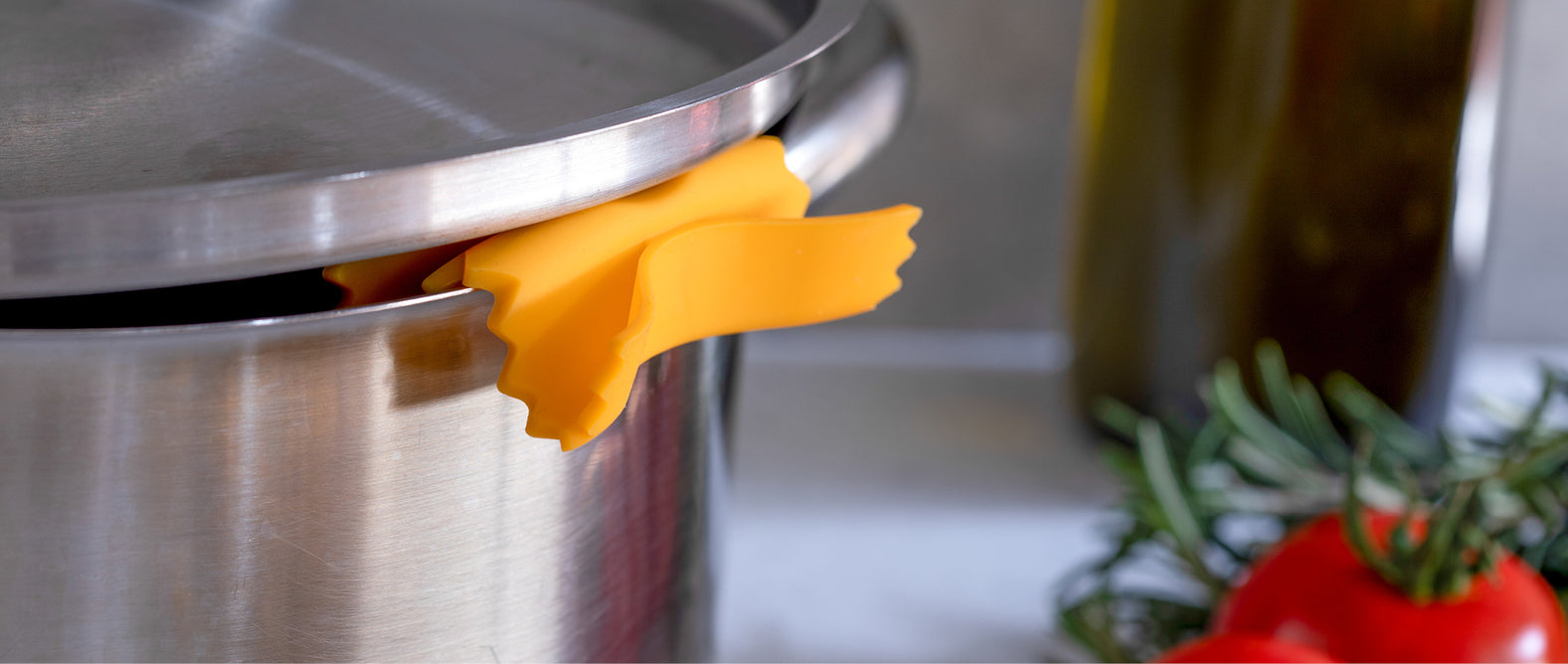
Monkey Business treats its gadgets as tiny invitations to play. Think of the Gregg fried egg shaper that turns a simple egg into a character at breakfast, or pasta themed trivets that spark a conversation before the first bite. The vegetable tools follow the same idea. Function first, with joy right behind it.
Step 4: Look for designs that feel safer, not scarier
A calmer kitchen is not just about speed and personality. It is also about how safe you feel, especially if kids or curious guests are hovering near the cutting board.
Big knives and traditional slicers can be intimidating. A dull knife is actually more dangerous, since it can slip and make you press harder. According to food safety educators, most home kitchen injuries come from rushed cutting with poor equipment.
Smart vegetable gadgets lower that risk by design. They use better grips, fewer exposed edges, and motions that feel more controlled. Well designed peelers, graters, and cutters can help you maintain better control throughout the prep process.
Monkey Business leans into safety by keeping tools compact and hand friendly. Instead of a long, heavy piece of metal, many of their gadgets feel like you are holding a smooth stone. That gives you better control, especially when you are distracted by a question, a dropped toy, or a timer beeping.
Step 5: Build a simple "tool ladder" instead of a junk drawer
To keep prep effortless and fun, you do not need a huge collection. You need a ladder. Each rung supports the next, without overlap or clutter.
Here is an example of how you could build that ladder using the idea of unique vegetable tools.
Base level: fix the obvious pain
Start with one problem that annoys you every single week. Maybe it is peeling root vegetables for soups and snacks. Maybe it is slicing salad toppings. Choose a tool that solves that pain with one motion. Something like Karoto 2 if you are constantly working with carrots and zucchinis, or a high quality peeler that home cooks rave about.
Middle level: add playful efficiency
Once your big annoyance is tackled, look at what slows you down next. Washing and drying greens? Chopping herbs? Creating uniform slices? This is where a small, playful tool can replace bulkier equipment.
Many home cooks find that a salad spinner cuts washing and drying time dramatically. A good spinner helps you rinse and dry not only lettuce, but herbs and beans too, all in one container. That is the kind of multi use value you want.
Top level: tools that support connection
This is where you get intentional about how your tools shape the experience around the food. Do you want kids to help with safe tasks, like curling carrots or assembling a salad? Do you want a simple gadget that makes every brunch egg feel like an occasion?
Here, you choose pieces that invite conversation and play. A quirky egg shaper, a pasta inspired trivet, or a clever veggie curler that turns boring sides into edible decorations. They might not save as many minutes as a big appliance, but they add something just as valuable. Joy.
How to judge if a cooking tool will actually simplify your prep
Before you click "add to cart," run the tool through a quick test in your mind. You can even use this as a checklist when you shop.
1. Does it replace at least two other tools?
If a gadget only does one hyper specific thing, ask yourself how often you actually cook that way. A curler that only works on one vegetable is less helpful than one that handles several shapes and sizes.
2. Can you clean it in under 30 seconds?
Research on home cooking habits suggests that people cook more often when cleanup feels manageable. If a gadget needs three brushes and a YouTube tutorial, it will end up at the back of the drawer.
3. Does it feel safe in distracted hands?
Think about worst case moments. Someone calls your name, the oven timer goes off, a kid asks for water. Are your fingers still protected? Is the tool easy to set down without risking an accident?
4. Does it make vegetables more appealing?
If a tool helps you turn simple produce into curls, ribbons, or shapes that look fun, you are much more likely to eat them. Kids especially are more willing to try new vegetables when they look different or playful.
5. Will it still earn its spot in 6 months?
Be honest. Once the novelty wears off, will you still reach for it at least once a week? If not, keep looking.
Real world examples of fun tools that still mean business
To make this more concrete, here are a few types of tools that fit the "effortless and fun" test, including some mentioned by other cooks and reviewers.
Multi function peelers and curlers. Tools like Karoto 2 handle peeling, curling, and julienning. They give you snack sticks, salad ribbons, and stir fry strips in one go.
Safe slicers. Mandolines with finger guards and non slip bases help you get paper thin slices for salads, gratins, or veggie chips without white knuckle fear.
Playful shapers. Egg molds, vegetable cutters, and pasta themed trivets turn ordinary meals into something that feels worth pausing for. They do not save minutes the way a food processor does, but they save arguments and add smiles.
Compact helpers. Little tools like bench scrapers make it easier to move chopped vegetables from board to pan without dulling your knife or losing bits on the counter.
None of these demand a total kitchen makeover. You can add them one at a time, letting each one earn its spot by proving it actually makes your evenings easier.
How unique vegetable tools shift your daily rhythm
When you put all of this together, you start to notice something. Your vegetable tools stop being background objects. They become quiet partners in your routine.
You start by noticing what drains your time and energy. You answer that with compact, multi function tools that chop, peel, curl, and slice faster. You choose designs that look playful, so vegetables feel fun instead of forced. You make your space safer with better grips and fewer exposed blades. Finally, you use all of that to invite more connection into your kitchen, whether that is kids helping prep or you finally feeling relaxed while you cook.
If each tool you own saves you just 2 minutes per meal, and you cook at home five nights a week, that is roughly 40 minutes saved every week. Over a year, that is more than 34 hours moved from "chopping and cleaning" to "eating and resting." That is one full waking day you get back, just from choosing smarter gear.
Key takeaways
- Identify the exact prep tasks that frustrate you, then choose tools that solve those first.
- Prioritize compact, multi purpose cooking tools that replace at least two other gadgets.
- Look for playful, kid friendly designs that make vegetables more appealing and prep more inviting.
- Choose safer shapes and grips so you feel calm using them, even with distractions around.
- Build a simple "tool ladder" over time, letting each new piece earn its place in your kitchen.

Bringing it all together
You do not need to become a professional chef to feel good in your kitchen. You just need tools that respect your time, your energy, and your sense of fun.
Start small. Pick one moment that always frustrates you, like peeling, washing greens, or slicing vegetables for snacks. Choose a smart, playful tool that makes that one step easier. Use it for a week. Notice how it changes your evenings. Then add the next rung on your ladder.
Over time, you will look around and realize something subtle has shifted. You are not dreading prep anymore. You are chatting while you curl carrots, laughing as an egg appears in a funny shape, and getting dinner on the table without feeling wrung out.
Your cooking tools will not just be objects in a drawer. They will be quiet helpers that give you back minutes, ease, and connection every single day. So the real question is, which part of your prep are you ready to make effortless and fun first?
FAQ
Q: How many cooking tools do you actually need for effortless prep?
A: You can keep it surprisingly lean. Aim for one good knife, one reliable cutting board, a multi purpose peeler or curler, a safe slicer if you love salads or gratins, and one or two playful shaping tools for fun. Focus on tools you use weekly, not "just in case" gadgets.
Q: Are playful cooking tools really worth it, or are they just gimmicks?
A: They are worth it if they tick three boxes. They do a real job faster, they are safe and easy to clean, and they genuinely make you want to cook more often. If a tool only looks cute but slows you down, skip it. If it makes vegetables more appealing and saves time, it earns its place.
Q: How do you keep gadgets from turning into clutter?
A: Use a simple rule. If a tool has not been used in 30 days, store it out of sight. If you still have not used it after 3 months, donate or gift it. Before buying anything new, ask, "What will this replace?" If it does not clearly replace or improve something you already own, wait.
Q: What should you prioritize if you are on a tight budget?
A: Start with the items that touch your food the most. A sharp, comfortable knife, a solid cutting board, and a high quality peeler usually deliver the biggest improvement for the lowest cost. Once those are in place, you can add playful extras like vegetable curlers or egg shapers when your budget allows.
Q: Are unique vegetable tools safe for kids to use?
A: Many are, as long as you look for enclosed blades, sturdy grips, and motions that do not require much force. Start kids on the most controlled tasks, like curling carrots with a guarded tool or pressing shapes into soft fruits. Always supervise, and treat it as a shared activity, not something they do entirely on their own.
Q: How do you know if a new tool will actually save time in your kitchen?
A: Before buying, imagine your exact dinner routine and where the tool fits. If you can clearly see it replacing two or three steps, it is a good sign. You can also look for reviews from home cooks who prep the way you do, and pay attention to phrases like "used daily," "replaced my old X," or "I wish I bought this sooner." Those are clues that it truly simplifies life, not just adds novelty.